Esta instalación para luz y coro se despliega en el batiente de la Sala de máquinas en la ex fábrica de San Pedro, un espacio cuya historia está atravesada por la fuerza del río, El Cupatitzio*, que alguna vez activó su maquinaria. Antes de ser arquitectura, este lugar fue energía en tránsito: agua en caída convertida en movimiento, en ritmo, en trabajo y en energía eléctrica para la comunidad de Uruapan.
La obra retoma esa memoria física y la traduce en un campo sensorial donde la luz y la voz funcionan como vectores de una fuerza invisible. Un coro interpreta una partitura compuesta a partir de fragmentos de diversas fuentes —el mito de la Rodilla del Diablo en Uruapan, el poema Der Ister de Friedrich Hölderlin en su lectura por Martin Heidegger, y el Cantar de los Cantares— que poetizan la transformación de la energía a través de distintas magnitudes: hidráulicas, técnicas, sonoras y lumínicas.
En el trasfondo de estas magnitudes emerge una misma idea: la creación como resultado de un encuentro entre fuerzas opuestas. En el mito, el roce entre lo pagano y lo sacro no se resuelve en antagonismo, sino en generación: del contacto entre el fraile y el diablo brota el agua, como una energía que no distingue entre el bien y el mal, sino que las une en un mismo flujo. Esta dimensión erótica, entendida como fuerza de unión y transformación, atraviesa la obra como principio activo.
La composición musical, realizada en colaboración con el compositor mexicano Juan Sebastián Lach, es interpretada por el Coro del Conservatorio de las Rosas de Morelia. La voz fluye de diferentes canales, inundando el espacio arquitectónico industrial. La luz, por su parte, no ilumina el espacio, sino que lo activa, revelando tensiones, ritmos y umbrales perceptivos.
Más que representar un fenómeno, la instalación construye una experiencia poética donde la energía se vuelve sensible: una continuidad entre el flujo del agua, la vibración del sonido y la modulación de la luz. En este sentido, el espacio no se presenta como contenedor, sino como un organismo vivo que recuerda su historia. Cada resonancia, cada desplazamiento lumínico, reactiva una memoria latente: la del flujo que alguna vez sostuvo la vida productiva del lugar en relación al río que le prestó su energía.
La obra propone así una reflexión sobre la transmutación de la energía —de lo material a lo sensible, de lo mecánico a lo afectivo— y sobre la persistencia de fuerzas que, aunque transformadas, continúan, como un eco, atravesando el presente.
Esta exposición se realiza en el marco de la Producción de Artes Visuales realizada con el estímulo fiscal del artículo 190 de la LISR (EFIARTES).
*Del purépecha: río que canta.
This installation for light and choir unfolds within the Machine Hall of the former San Pedro textile factory, a space whose history is traversed by the force of the Cupatitzio* River, which once powered its machinery. Before becoming architecture, this place was energy in motion: falling water transformed into movement, rhythm, labor, and electrical power for the community of Uruapan.
The work draws upon this physical memory and translates it into a sensory field in which light and voice operate as vectors of an invisible force. A choir performs a score composed from fragments drawn from several sources—the myth of the Devil’s Knee in Uruapan, Friedrich Hölderlin’s poem Der Ister as interpreted by Martin Heidegger, and the Song of Songs—all of which poetically evoke the transformation of energy across different magnitudes: hydraulic, technical, sonic, and luminous.
Behind these different magnitudes, a single idea emerges: creation as the outcome of an encounter between opposing forces. In the myth, the friction between the pagan and the sacred is not resolved through antagonism, but through generation: from the encounter between the friar and the devil, water springs forth as an energy that does not distinguish between good and evil, but joins them within a single flow. This erotic dimension—understood as a force of union and transformation—runs through the work as an active principle.
The musical composition, created in collaboration with Mexican composer Juan Sebastián Lach, is performed by the Choir of the Conservatorio de las Rosas in Morelia. The voices flow through different channels, flooding the industrial architectural space. Light, for its part, does not illuminate the space so much as activate it, revealing tensions, rhythms, and perceptual thresholds.
Rather than representing a phenomenon, the installation constructs a poetic experience in which energy becomes perceptible: a continuum between the flow of water, the vibration of sound, and the modulation of light. In this sense, the space is not presented as a container, but as a living organism that remembers its own history. Each resonance, each movement of light, reactivates a latent memory: that of the flow that once sustained the productive life of the site, in relation to the river that lent it its energy.
The work thus proposes a reflection on the transmutation of energy—from the material to the sensory, from the mechanical to the affective—and on the persistence of forces that, although transformed, continue to reverberate through the present like an echo.
This exhibition is presented within the framework of the Visual Arts Production Program, supported through the fiscal incentive established under Article 190 of Mexico’s Income Tax Law (EFIARTES).
*From Purépecha: “the river that sings.”
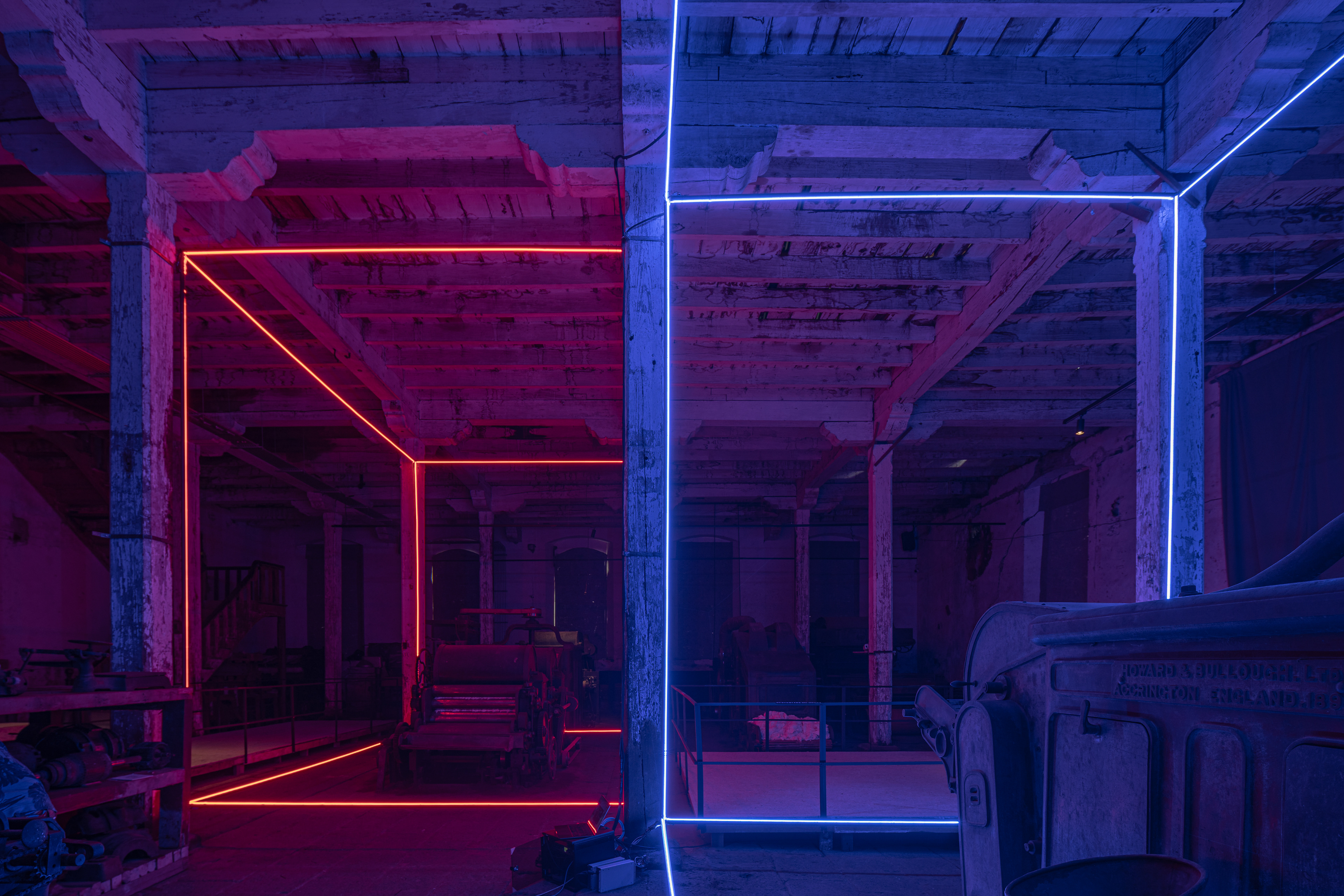
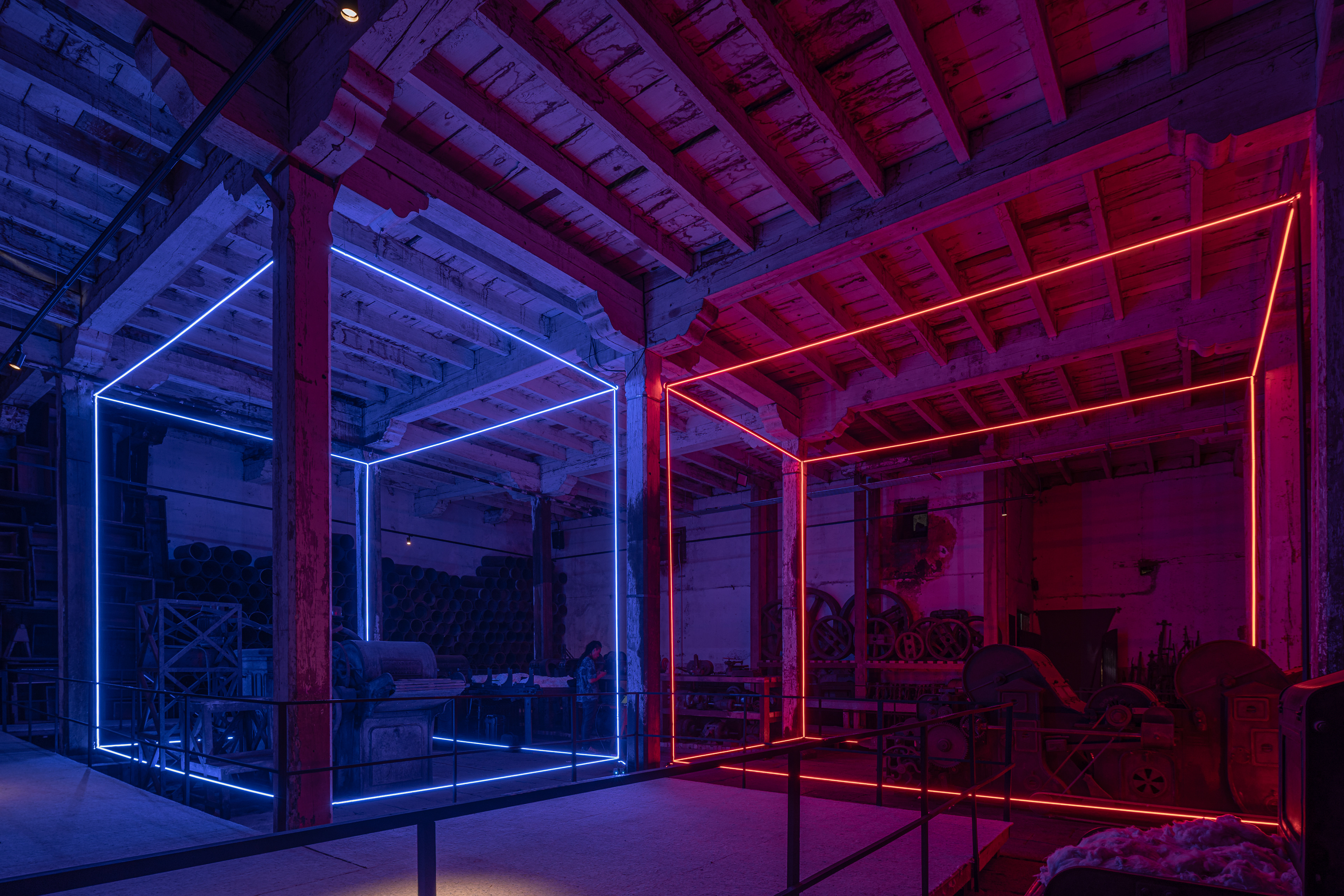
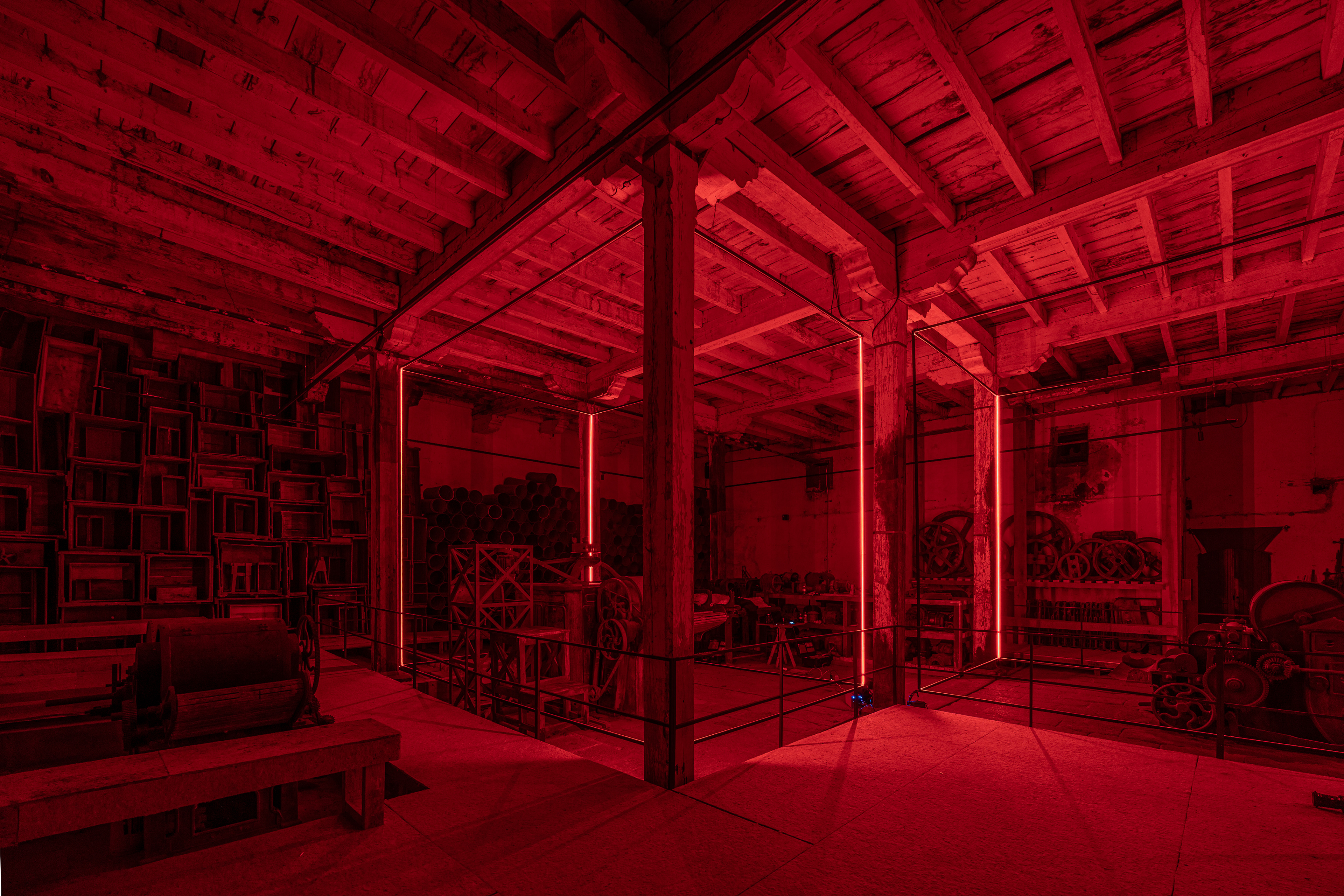
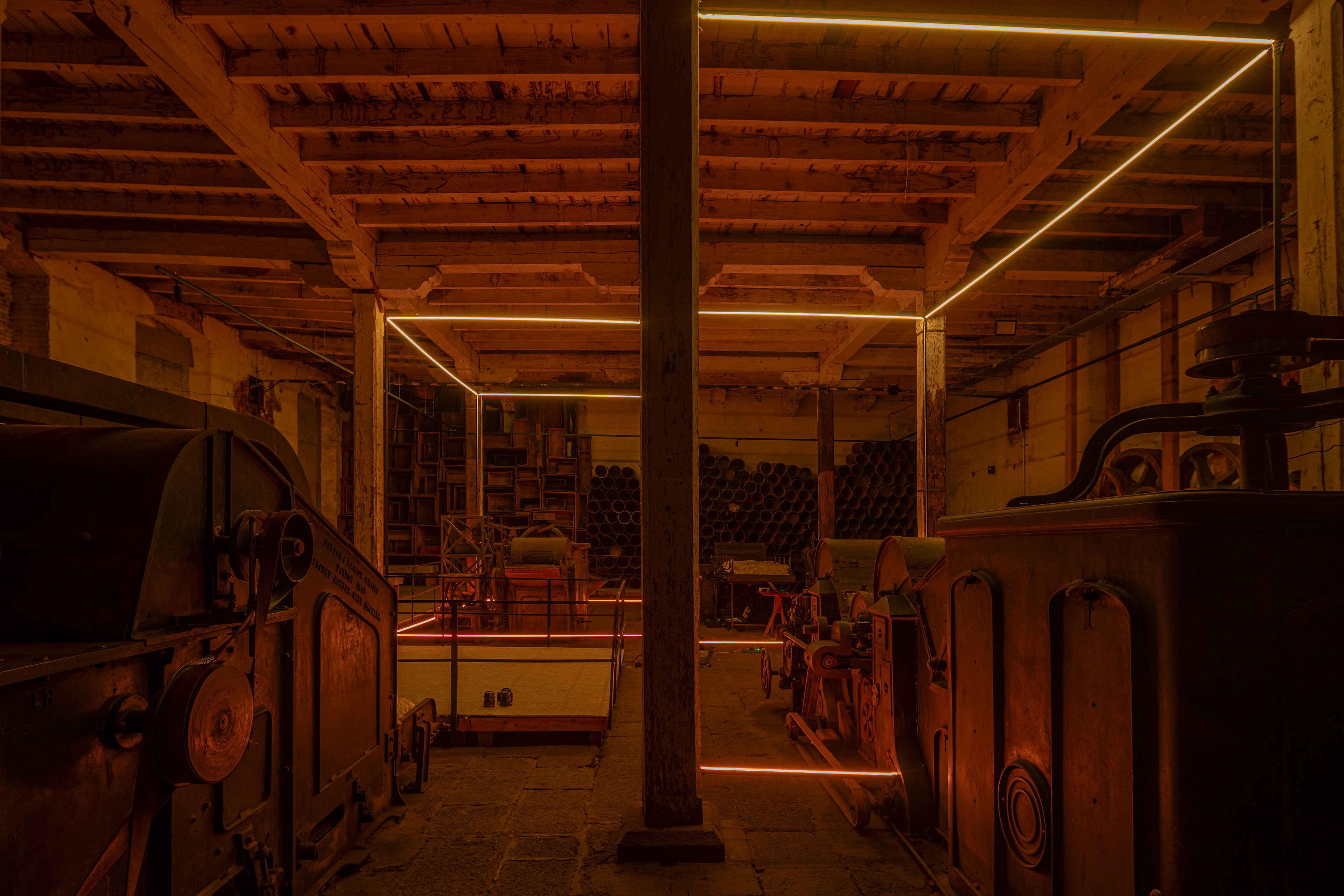
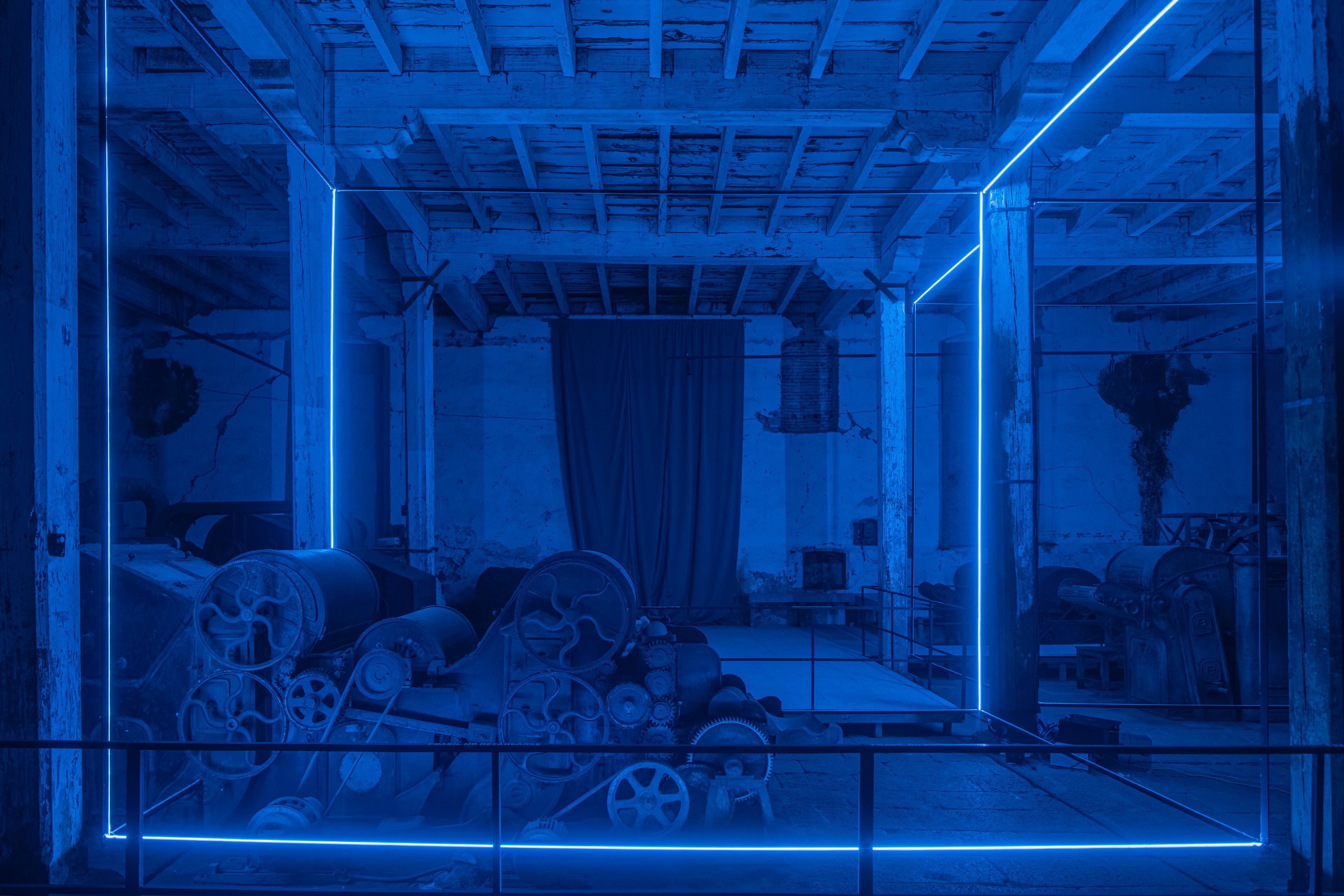
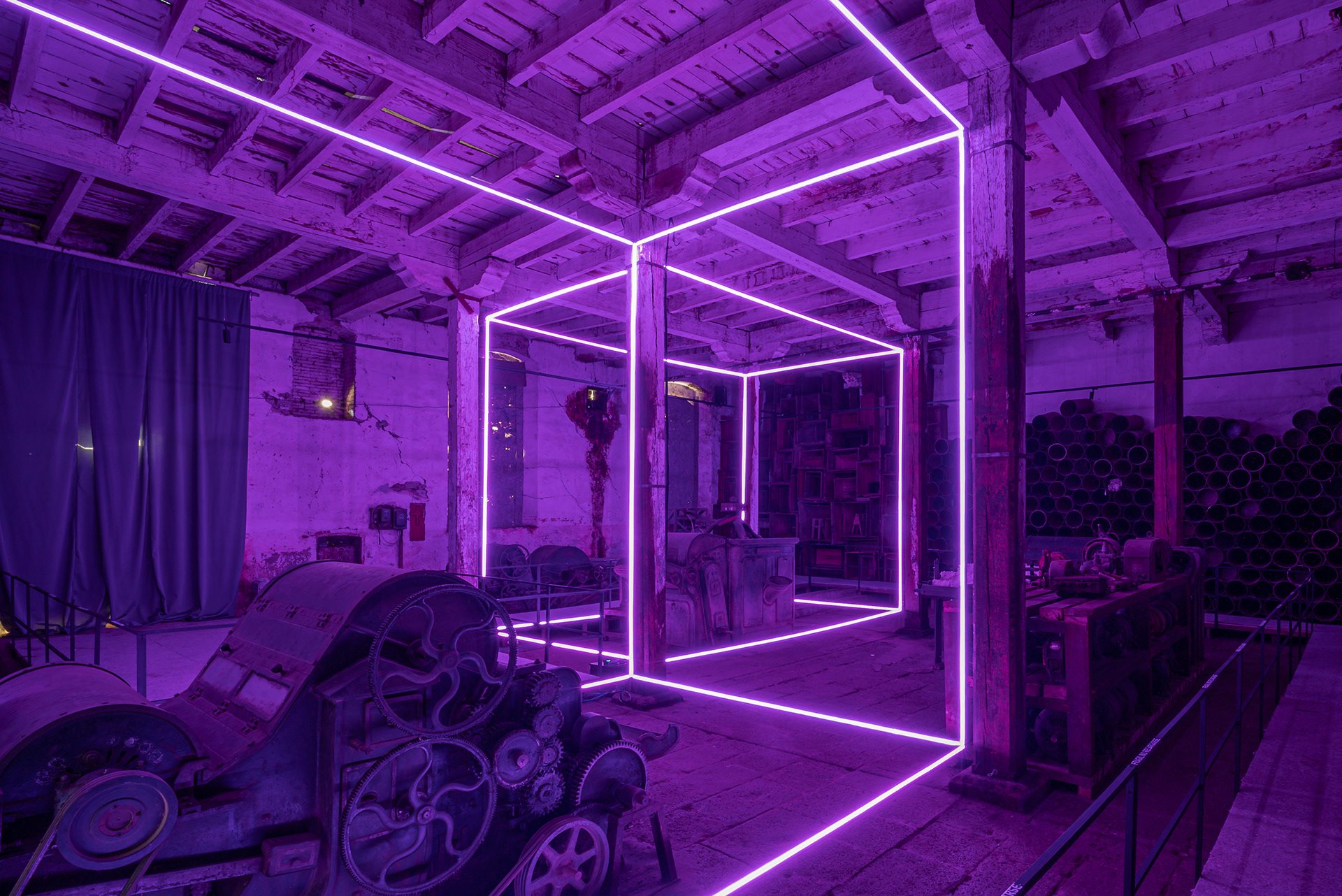
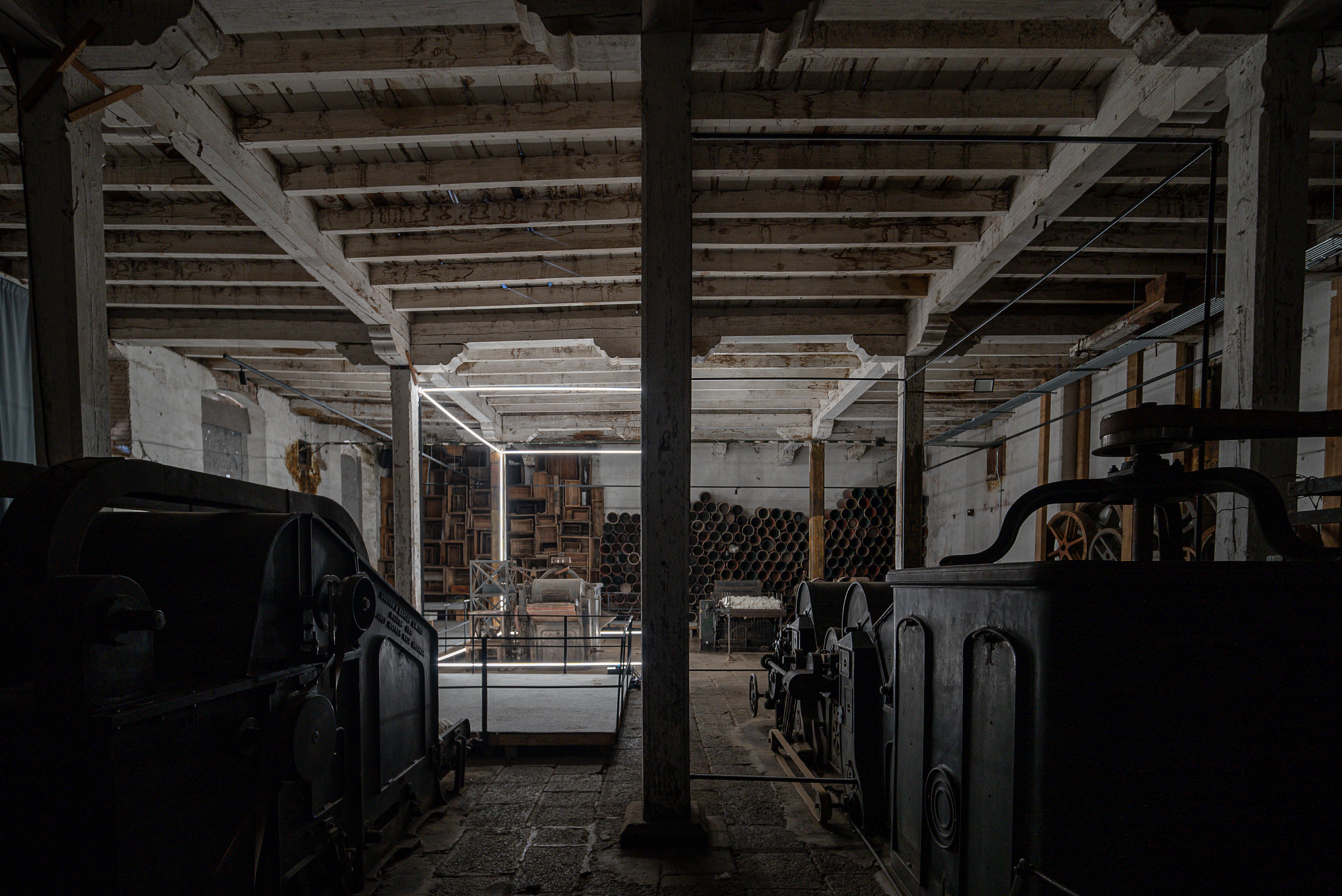
Vistas de instalación de El río que canta, Centro Cultural Fábrica de San Pedro, Fundación Javier Marín, Uruapan, Michoacán, 2026. Fotos: Andrés Cedillo / ESPACIOS
Vista de instalación de El río que canta, Centro Cultural Fábrica de San Pedro, Fundación Javier Marín, Uruapan, Michoacán, 2026. Video: Andrés Cedillo / ESPACIOS